
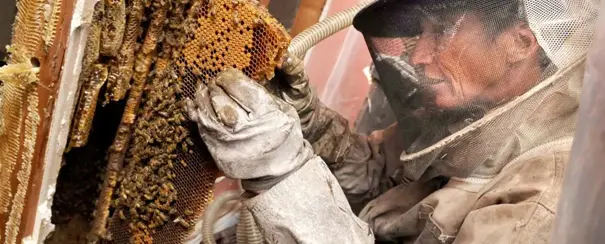
Honey bees are good for plants, farms, and flowers. Most of the time, they stay busy in gardens, fields, and trees, and people do not need to worry. The problem starts when they move too close to a home. A few bees on flowers are normal. A group of bees near your wall, roof, porch, or shed every day is not. In many cases, that means they have found a place to live. Once that happens, they may start building wax comb, storing honey, and raising young bees. The nest can grow fast. It can also lead to noise, stains, fear, and a higher chance of stings. If you have seen bee activity around your home, do not guess. These seven signs can help you tell when it is time to call for help today.
How A Tiny Opening Becomes A Costly Bee Infestation
One of the easiest signs to spot is this: bees keep flying to the same place over and over. You may see them going into a gap near the roof, a crack in the wall, a vent, a pipe opening, or a hole in a tree close to the house. They do not do this by chance. Worker bees leave the nest to gather nectar, pollen, and water. Then they return to the same place because that is where the colony is.
This kind of bee traffic often looks busy in the late morning and afternoon. On warm days, it becomes even easier to see. At first, there may be only a few bees. A week later, the number may be much higher.
Look for signs like these:
- Bees flying in a steady line
- Bees are entering one gap again and again
- More activity on warm, dry days
This matters because a honey bee colony can grow large. A colony may hold thousands of bees. If they have chosen one entry point, there is a good chance the nest is already behind it. The sooner you deal with it, the less chance the colony has to grow.
Bees Disappearing Into Walls Or Roofs
Many people feel worried when they see bees outside. The bigger problem is when the bees go out of sight. If they slip into a wall gap, attic vent, soffit, roof edge, or chimney area, they may be nesting inside the structure. That means the issue is no longer just outside your home. It may already be part of your home.
Honey bees like covered spaces that feel safe and dry. A wall void or attic can give them both. Once they settle in, they build a comb from wax. That comb is used for honey, pollen, and brood. Brood means young bees growing inside the hive. The queen stays in the nest, and worker bees keep the colony running.
Pay close attention to:
- Bees are entering near the vents
- Bees are disappearing under the roof edges
- Bees are going through tiny cracks in the siding
A small opening can hide a big nest. You may only see the doorway, not the colony behind it. That is why people often think the problem is small when it is not. If bees are going into the house, the problem needs attention now, not later.
Persistent Indoor Buzzing That Signals A Hidden Hive
Sometimes the first clue is not what you see. It is what you hear. If you notice a soft hum inside a wall, above a ceiling, or near a fireplace, that can point to a bee colony hidden in the building. Many people hear it at quiet times, such as early morning or late at night.
A working hive is never still. Bees move across the comb, feed young bees, fan their wings, and pass signals through movement and vibration. That creates a steady buzzing sound. It may seem light at first, but it can grow louder as the colony gets bigger.
Watch for details like these:
- The sound comes from the same spot each day
- The hum gets louder over time
- You also see bees outside near that area
This is not just a strange house noise. It can mean the hive is active and growing. A live colony inside a wall may already contain wax comb, honey, pollen, eggs, and larvae. Once the bees are well settled, the problem does not usually go away on its own. Waiting only gives the hive more time to expand.
Sticky Wall Stains That Signal A Hidden Bee Hive
A hidden bee nest can leave marks inside your home. This often happens after the colony has been there for a while. Honey bees store honey in wax comb. When the weather gets hot, that wax can soften. If the comb becomes weak, honey may start to leak into the wall or ceiling.
At first, you may notice a yellow or brown stain. Later, the spot may get larger. In some homes, the area feels sticky. Some people notice a sweet smell before they see any mark at all. That smell can come from warm honey trapped behind drywall or wood.
Common warning signs include:
- Brown or yellow marks on the paint
- Sticky patches on a wall or ceiling
- A sweet smell in one room
This sign matters for two reasons. First, it may point to a colony that has been there long enough to build a good amount of comb. Second, leaking honey can attract other pests, such as ants and roaches. Even if the bees leave, old honey and comb can still cause trouble. That is why full removal matters, not just chasing the bees away.
Why Bee Swarms Keep Returning To Your Home in Houston
A swarm is a large cluster of bees gathered in one place. You may see it hanging from a tree branch, fence, mailbox, or porch rail. This happens when part of a colony leaves with a queen to look for a new home. A swarm may stay in one place for a short time while scout bees search nearby.
One swarm does not always mean bees have moved into your house. But if swarms keep showing up around your property, that is a sign worth taking seriously. Your home may have openings or spaces that attract them. Hollow trees, sheds, wall gaps, and attic spaces can all look like good nest spots to bees.
Look for a pattern like this:
- Swarms show up more than once
- Bees gather near the same area
- The cluster later disappears from sight
When that happens, the bees may have moved into a hidden space. Swarming is a normal part of bee life, but repeated swarms near your home should not be ignored. It can mean your property keeps drawing bees in. Fixing the issue early is easier than dealing with a settled hive later.
When Avoiding The Yard Signals Honey Bee Removal
A bee problem becomes very real when it changes how your family lives. Maybe the kids will stop playing in the yard. Maybe people do not want to sit on the porch. Maybe you rush from the car to the front door because bees are always near the same path. That is a strong sign the nest is too close to daily life.
Honey bees are not out looking to sting people. Most of the time, they sting when they feel trapped or when someone gets too close to the nest. The problem is that busy home areas make it more likely. A walkway, deck, play area, garage, or pool space can put people right in the bees’ flight path.
This risk is higher for:
- Children who may not notice bees
- Pets that chase moving insects
- People with sting allergies
You should not have to avoid your own yard. Even if no one has been stung yet, the colony is already causing stress and changing your routine. That alone is a good reason to act. A home should feel usable and safe, not tense every time someone steps outside.
Bee Activity Keeps Increasing Around Your Home
Many people wait because they hope the bees will leave. That can happen with a resting swarm. It does not usually happen with a settled colony. If the bees have been active for several days and the traffic stays steady, the hive may already be established.
This is where a simple detail helps: look at the bees’ legs. If you see small yellow or orange clumps, that is pollen. Bees carry pollen back to the nest to feed young bees. That often means brood is inside. Brood includes eggs, larvae, and pupae. When brood is present, the colony is living there, not just stopping by.
Signs the bees are settled include:
- Activity lasts more than a few days
- The number of bees keeps rising
- Bees carry pollen into one opening
This is one of the clearest signs that waiting will not fix the problem. A settled hive keeps building. More bees mean more comb and more honey. More comb and honey mean more weight, more mess, and more work later. If the activity has stayed strong, today is the day to make the call.
Act Fast To Avoid Costly Honey Bee Damage
Honey bees matter in nature, but they do not belong inside your walls, roof, attic, or busy yard areas. If you have seen bees using one entry point, slipping into vents, buzzing inside walls, leaving stains, or returning again and again, those signs should not be ignored. A small hive can turn into a bigger problem in a short time. Quick action can help reduce the chance of stings, limit damage, and stop honey and comb from building up inside the structure. If you have noticed these signs at your home, Budget Bee Control offers honey bee removal services and can help you handle the problem in a safe and simple way.